
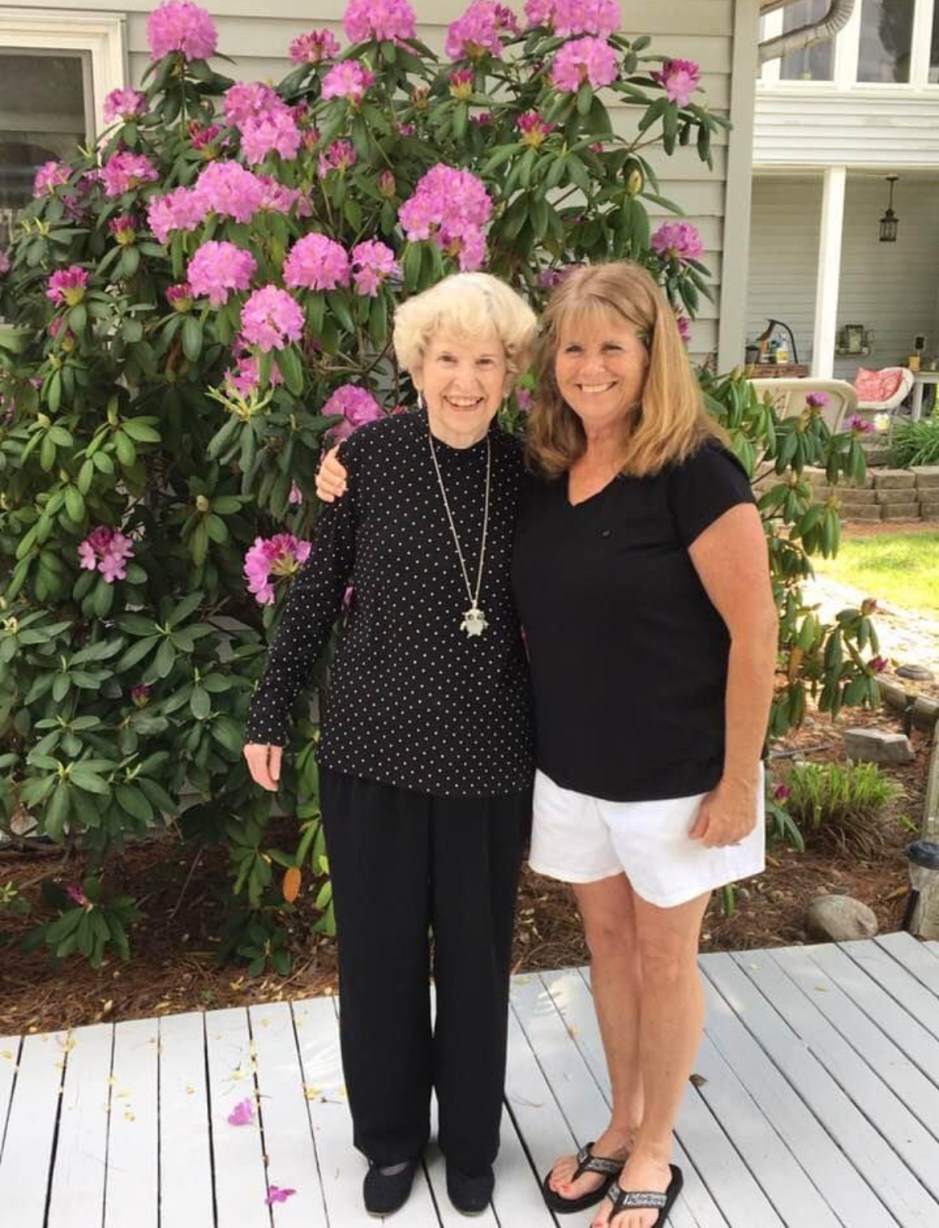
I’m baaack!!!!!
It feels really good to say that! The past five months have been an emotional roller coaster for me since my mom passed away. I had no idea how difficult losing my mom was going to be. I thought I would be so relieved for her to be with Jesus. But instead of relief, I’ve felt so much pain and sadness.
Don’t get me wrong. I am so happy she is with Jesus and no longer suffering with mental and physical ailments. She is home. She is at peace. I picture her sitting at the feet of Jesus listening to His every word. I imagine her clapping her hands praising Him with everything she has within her.
But, I miss her. I miss her smile; her encouragement; her laughs; her hugs; her words of affirmation; her wisdom; her goofiness; and most of all her presence. I always felt good about myself when I was with her. She had a way of making me feel special.
Mom and I fought many battles together. My abusive father; my brother’s mental illness; our family dynamics; Mom’s health issues. We both struggled with depression and anxiety. We also wrestled with self-esteem issues. We had a strong bond between us.
We could relate to each other and lift each other up when one of us needed encouragement. She was the best encourager to me and to others. If she were here, she would say I was the best at finding laughter and being goofy. I can hear her saying, “Honey, whenever I am with you, you make me laugh. I need to laugh.”
Even though I am grieving, and even though I miss her, God is teaching me how to cope and feel my grief, so I don’t get stuck in it.
I’ve come to the conclusion that most of us don’t value what grief can teach us. We don’t take the time to process all the emotions and feelings that are going on inside of us. What we usually do is “suck it up” and move on. The problem with doing that is the fact that our feelings and emotions will eventually surface. And when that happens, it can be devastating.
I know from personal experience what can happen when you “suck it up!” For forty years, I kept my feelings and emotions buried as far down as I could, but then there came a day when my body said, “NO MORE!” My body was telling me I couldn’t keep doing what I was doing. The panic attacks hit me hard. It was a horrible time in my life, but it was also the best time in may life because I was forced to deal with so many issues that I buried deep inside me.
Grieving also doesn’t always happen because of a death. We can grieve over relationships, jobs, lost dreams, our past, words that were said, injustice, poverty, the world we live in, hate and corruption. A heart can grieve over many things. It’s what we learn from our grief that helps us heal.
“Our bodies deserve to be witnessed and honored with dignity in our deepest pain.” Kolber We need to love our bodies, more than ever, when we are going through something traumatic. Our society wants us to move on and get over it much sooner than our bodies are ready to.
After my mom passed away, I remember saying to the Lord, “Help me grieve. Help me learn and grow through my grieving. I don’t want to shove my feelings down because we know that hasn’t worked for me in the past. I want to face this with You by my side. I want to cry as much as I need to. I want to embrace my feeling and emotions. I want to be aware of what my body needs. Thank you for being by my side and never letting go of me.”
God made our bodies to be able to process our pain, our trauma, and our emotions and feelings. Our nervous systems are designed to move towards wholeness, but our unresolved pain and trauma can impede our healing.
After mom passed away in January, I tried to pay attention to how my body was reacting to her death. At first, I experienced extreme fatigue. I cried all the time. My brain was so foggy that I felt like I couldn’t think straight. My reactions were completely normal, but I wasn’t comfortable with the way my body was reacting. I knew if I didn’t allow my body to process my grief, I would make things worse.
The biggest lesson I am learning is the fact that I must tend to my body. WE MUST!!! And in order to tend, we have to find time to be alone to listen to what is going on inside of us.
“Our power comes not from the wounds, but the tending. Not from the trauma, but from the way it’s cared for. Love is the building block for true resilience.” Kolber
If you are like me, and had to push and scratch and claw your way through life in order to survive, tending to your body is very difficult to do at first. Showing myself compassion has not been easy. I can get extremely frustrated with my body for reacting the way it does. But what I am realizing is, being frustrated, isn’t going to get me anywhere. My frustration can easily turn into condemnation. My body has been through too much and fought really hard for me to survive and even thrive. I need to love what my body has done for me and not condemn it.
I wasn’t shown unconditional love by my father. I had to perform and please to get attention and love. So, I’ve had a very hard time loving myself. It’s much easier for me to criticize myself than give myself compassion. I’ve been my biggest obstacle. I’m working really hard to change in this area because I realize I have to show myself compassion in order to move forward.
A second lesson from grief is the fact that our bodies are powerful communicators. If your body is reacting to something in your life, it is trying to tell you to stop and tend to it. Tears are a gift from God because they are one of the best ways for our bodies to release our pain and sorrow. How many times have you heard that tears are a sign of weakness? I beg to differ. They are a sign of power because you are allowing what needs to flow come out of you.
We need to cry. Jesus wept with grief. (John 11:35) Our emotions are important. Our feelings matter. If I hear somebody else say tears are a sign of weakness, I might just have to slap that person in the face. My father told us growing up that, “Pain doesn’t hurt.” You can imagine how that statement scarred me emotionally because my pain does hurt. My poor body didn’t know how to process pain because of those words.
Another lesson from grief is we can’t logic ourselves out of the way our body reacts. Most of the time, our bodies are responding to something in our past that is triggering us in the present. I can’t tell you how many times my body has gone into fight or flight mode without me knowing what triggered me. I will literally stand there and say to myself, “What in the world is going on? I don’t understand why I am all of a sudden so scared. What happened? Why am I reacting this way again?”
Three months to the day after my mom died, my body went into fight or flight mode in the middle of the night. I woke up in extreme panic. I thought I was dealing with everything pretty well, but my body wasn’t in agreement with me. I found out that when something traumatic happens, sometimes it takes three months for the body to fully react.
My initial reaction to my body was, “Not again! I don’t like feeling this way. I thought I was doing pretty well and now you are making me feel so scared and vulnerable. I am sick and tired of this! I want to be over this! Why can’t you calm down and cooperate with me?”
Was I compassionate with my body? No. Was I frustrated and condemning? Yes. I wasn’t happy with the way it was responding. I have to go to the Lord and find out what needs to happen. I talked to my counselor. I have to use the techniques I’ve learned like grounding, breathing, praying, exercising, raising my hands in the air while I dance, tears and journaling. God gives us all kinds of ways to help us move through our pain.
Grief isn’t fun. But I am so thankful for what I am learning from it. I am thankful for all the resources God has given me to help me grow and move through my pain. My next post is going to be about the many revelations I’ve learned about myself from my pain. (There have been many “AHA” moments.)
There is purpose in our pain. Our pain teaches us; brings us closer to the One who created us; shows us what needs to be tended to in our lives; gives us compassion for ourselves and also for others. If we allow ourselves to grieve, we can actually find hope in our pain.
Tasha Jun says, “Lament is a womb for hope.” May our pain and grief become a womb for hope in all of us.
Until next time. This is my journey to joy.
 journey to joy